Company: GrubDial (AI‑powered restaurant assistant, B2B HoReCa)
Founded: 2024
Founder/CEO: Kalpesh Shethia
Team style: Dev‑first; testing historically done by Developers & Product Owner

Treegress impact at a glance:
About GrubDial
GrubDial is an AI‑powered voice assistant for restaurants. It’s literally the future of food ordering. In 2024, shipping speed mattered most: move fast, experiment, and get to market quickly. This approach worked. But as customers grew and the platform matured, the team faced a common dilemma: how to raise quality without slowing down or pulling developers into hours of manual testing every sprint.
The Challenge
1. Zero structured regression: there was no regression checklist and no formal regression cycle, which increased the risk of issues slipping through.
2. Developer time drain: Developers and the Product Owner were doing testing and re-testing themselves, which slowed down feature delivery.
3. Confidence gap: Even with a strong MVP, it’s hard to rely on gut feeling alone. The team wanted clear signals that critical flows were still working release after release.
Baseline: ~0% of product functionality covered by repeatable regression tests.
How Treegress Was Rolled Out
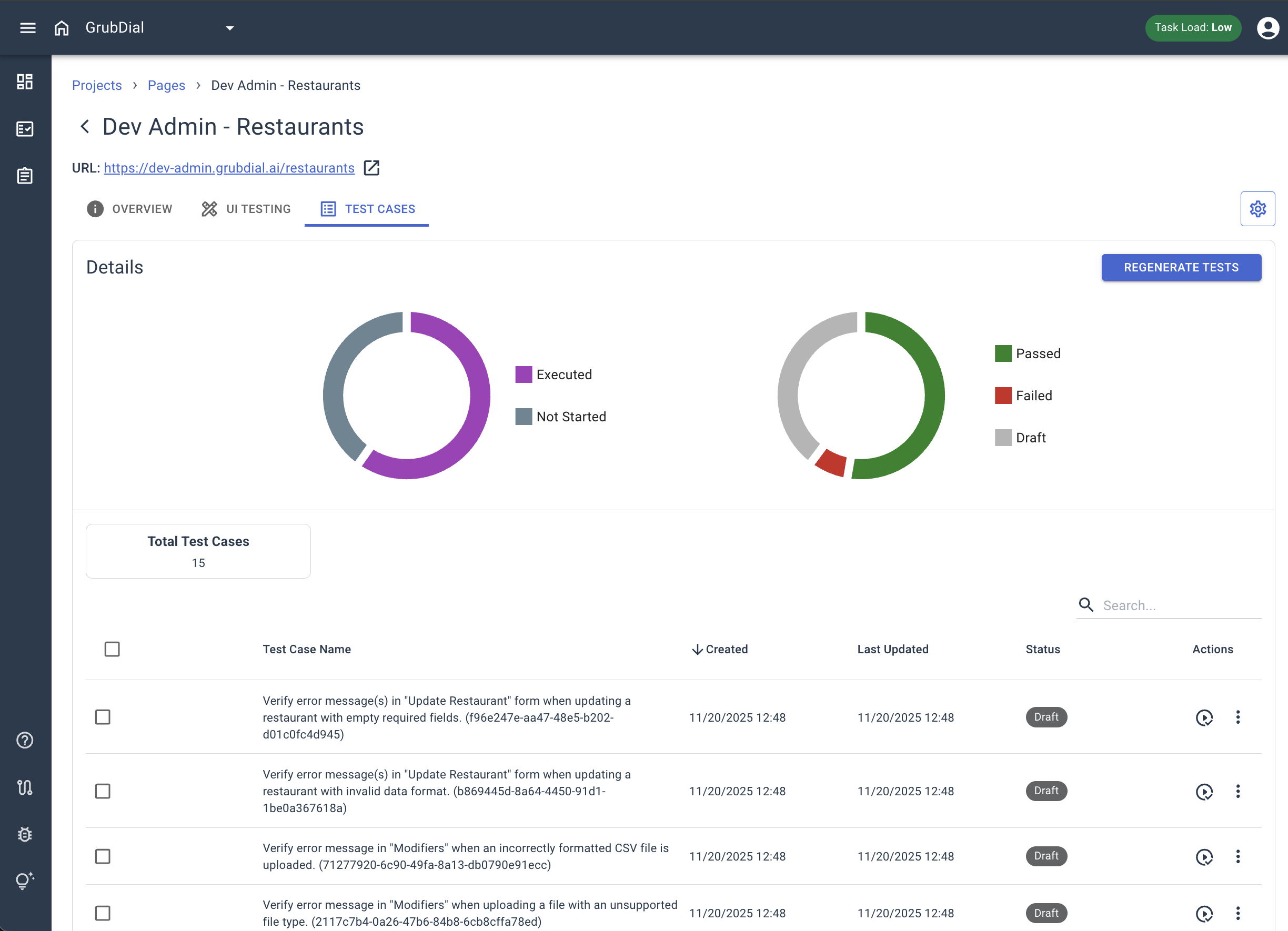
→ Week 0 (Spin‑up): The team connected the admin URL to Treegress. Right away, Treegress generated around 10 meaningful tests across the core flows.
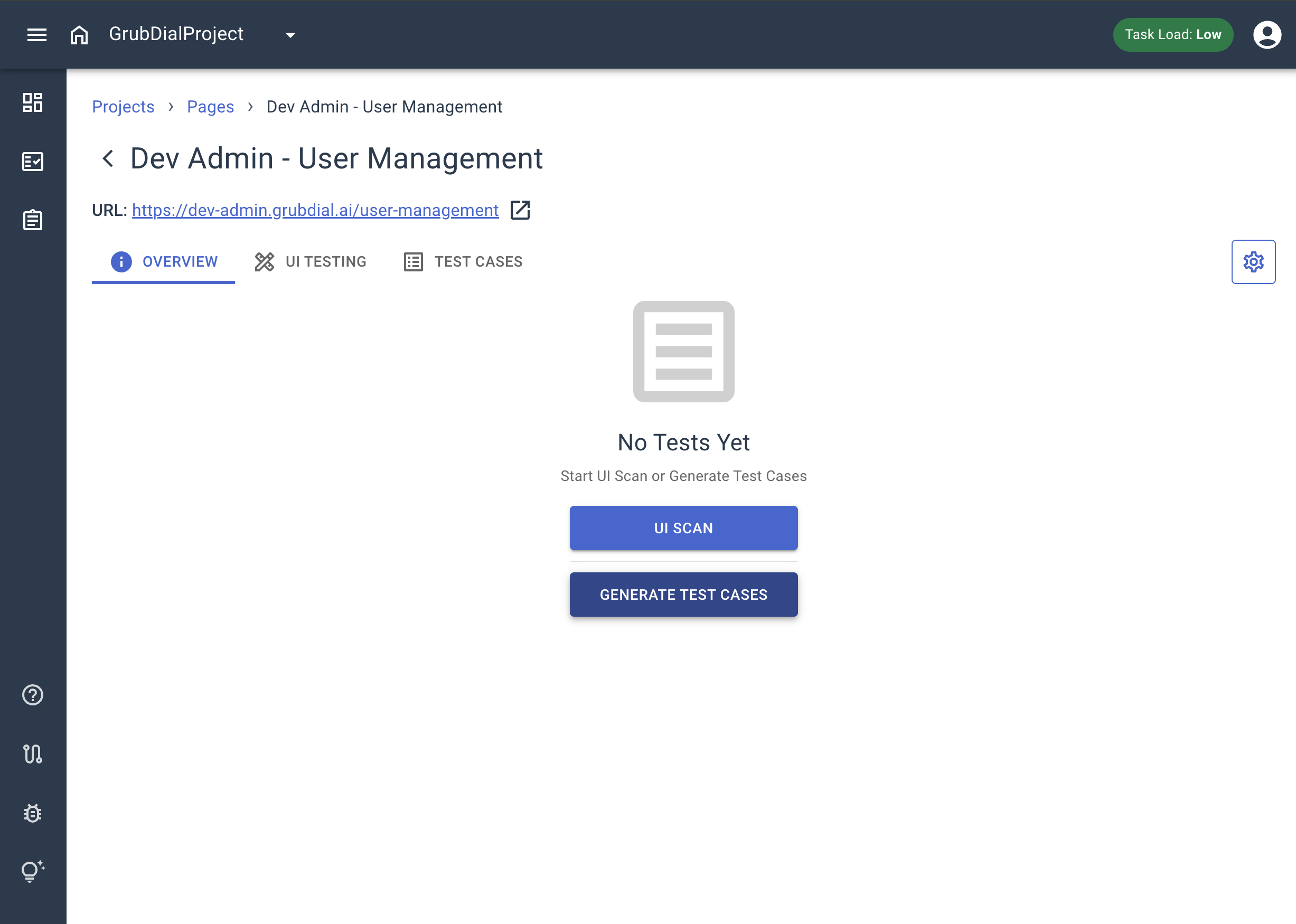
→ Weeks 1-4 (Scope tuning): together, we focused testing on the most important business paths. 3d-party integrations like Stripe and VAPI were intentionally left out of scope at this stage.
From then on, Treegress became a simple and predictable part of each release: run the suite, check any flagged items, and move forward. Developers no longer had to spend hours going through the same manual steps.

What Changed Day by Day
Before: Releases depended on developers manually clicking through the product to confirm core flows still worked. Everyone tested a bit differently, and reproducing issues often took extra time. It wasn’t inefficient, it just didn’t scale as the product grew.
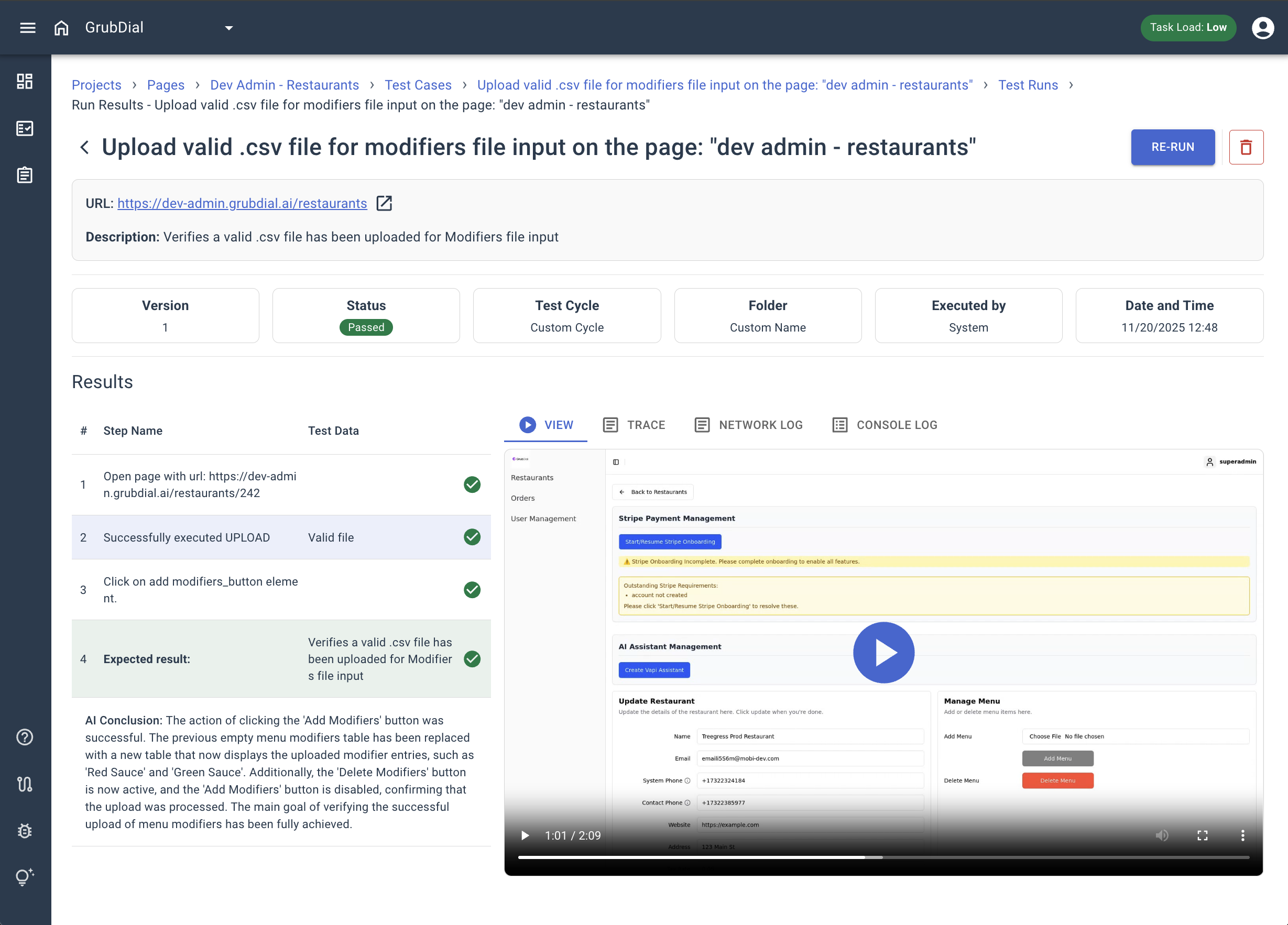
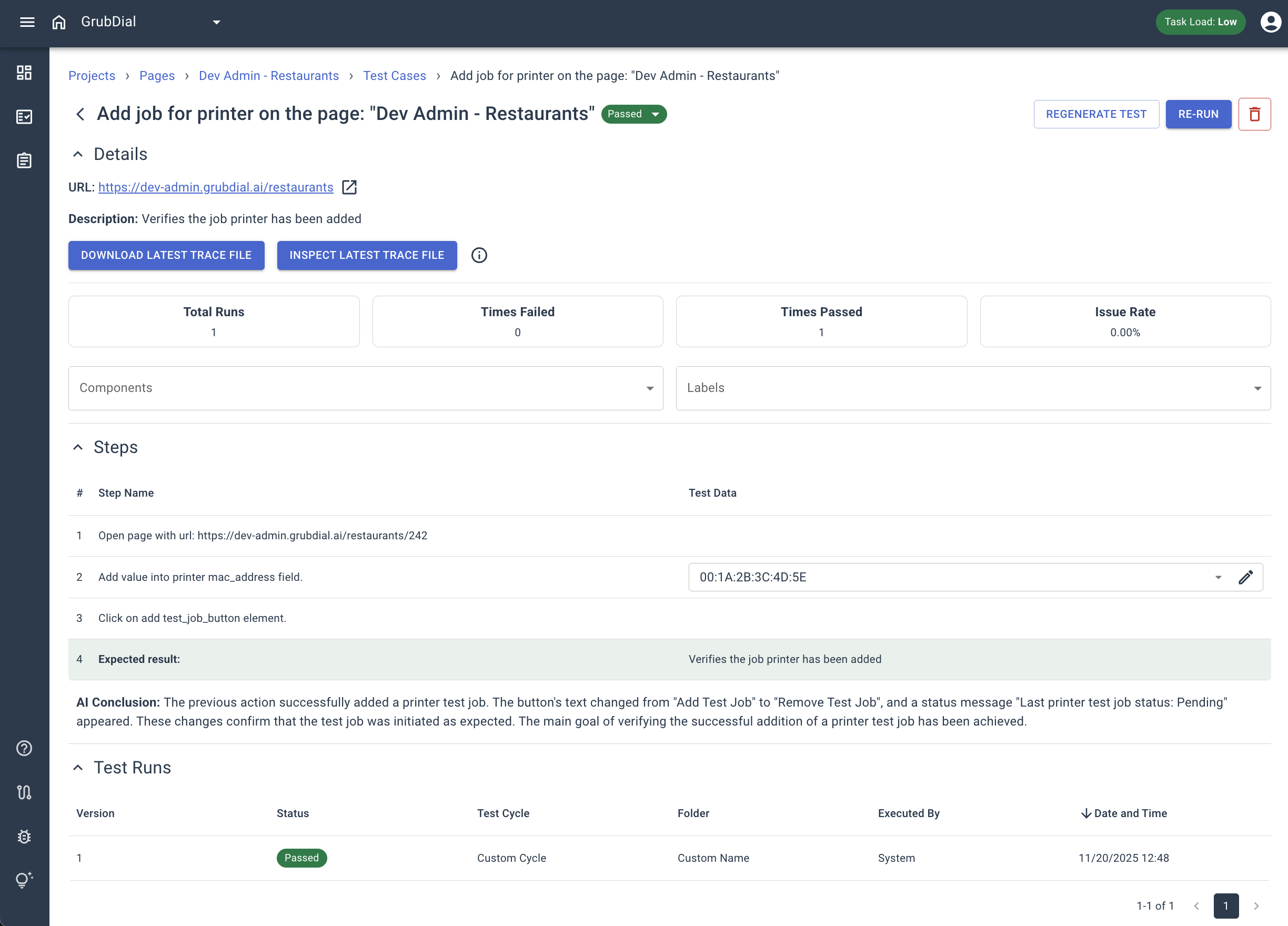
After: Now the team starts a regression run in Treegress and gets a clear picture of what’s working and what needs attention. Failures come with context and evidence, so fixes are faster. Regression checks fit naturally into the release flow and don’t pull developers away from feature work.
Covered Workflows
Results and Business Impact
- Coverage: from 0% to ~80% of admin flows
- Effort: ~60 human-equivalent hours of testing per release now handled by AI
- Velocity: ~15% of developer time freed from manual testing and retesting
- Focus: engineers spend more time on product features and improving the AI voice assistant
- Signal, not guesswork: recent releases did not reveal critical pre-release issues (a good sign of product stability), but now the team has proof, not assumptions – every month, tests confirm that core flows still work.
What’s Next
The next step is to extend automated coverage from the admin panel to the AI Voice Agent itself, bringing the same level of visibility and confidence to end-to-end voice interactions.
Book a tailored demo or start a trial